


HONG KONG, Oct. 26, 2026 /PRNewswire/ — Fructose is an important nutrient, which despite having a chemical structure very similar to that of glucose, is metabolised very differently in the body. Research into fructose metabolism and its regulation of metabolism in the human body has in recent years become a frontier topic in the life sciences and medicine. A new study led by researchers at City University of Hong Kong (CityUHK) has found that in the specific metabolic context of hepatocellular carcinoma (HCC), dietary fructose does not fuel tumour growth. Instead, it can suppress it, revealing a previously unknown anti-cancer mechanism.

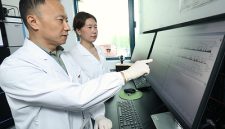
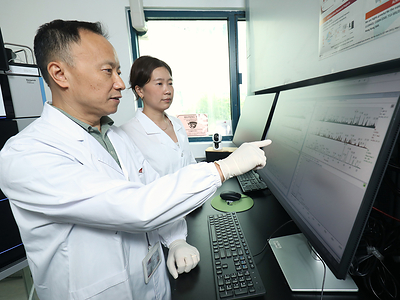
A new study by Professor Yin and his team has found that, in the specific metabolic context of hepatocellular carcinoma (HCC), dietary fructose does not fuel tumour growth, but can suppress it instead.
The team, led by Professor Yin Huiyong, from the Department of Biomedical Sciences in CityUHK’s College of Biomedicine; and Professor Zhong Shanshan, Research Assistant Professor in CityUHK’s Tung Biomedical Sciences Centre, recently published its findings in the international journal Signal Transduction and Targeted Therapy, under the title "Fructose 1-phosphate inhibits mannose phosphate isomerase to suppress hepatocellular carcinogenesis".
HCC is one of the leading causes of cancer deaths worldwide, and its metabolic pathways are complex and variable. The team found that as HCC progresses, fructose-1,6-bisphosphate aldolase B (ALDOB), the key gene responsible for breaking down fructose, is progressively downregulated. This downregulation occurs earlier and more markedly than in other genes involved in fructose metabolism, such as GLUT2 and KHK. In essence, although HCC cells retain the ability to take up and initially phosphorylate fructose, they become increasingly unable to fully break it down.
To model this metabolic deficiency, which is common in human HCC, the team established a liver cancer mouse model with a liver-specific knockout of the ALDOB gene. They gave some of the mice drinking water supplemented with 10% fructose. The results were unexpected: in mice lacking ALDOB, fructose significantly suppressed tumour formation and growth, while in mice with normal gene expression, fructose had almost no effect.
The team found that the key lies in an intermediate metabolite: fructose 1-phosphate (F1P). Because of the loss of ALDOB, F1P accumulates in HCC cells and binds directly to mannose phosphate isomerase (MPI), inhibiting its activity. MPI is a key enzyme in the process of protein N-glycosylation; when inhibited, protein glycosylation becomes defective, triggering endoplasmic reticulum (ER) stress in cancer cells and ultimately inducing cancer cell apoptosis. Through molecular docking and dynamics simulations, the team confirmed that F1P exerts its inhibitory effect by binding to the Arg295 site on MPI. The team also found that supplementing mannose could "bypass" the blocked step involving MPI, successfully reversing the anti-cancer effect of fructose and confirming that MPI is the key node in this pathway. The team also observed metabolic features in human HCC tissue samples consistent with those seen in the mouse model.
As MPI is upregulated in many cancers, including HCC, the team identified it as a promising therapeutic target. Screening approximately 2,000 drugs approved by the US Food and Drug Administration (FDA) or in clinical trials, the team found that ebselen is an effective MPI inhibitor, functioning similarly to F1P. In mouse models, ebselen suppressed liver cancer growth and produced a synergistic effect with sorafenib, an existing targeted therapy for liver cancer, thereby enhancing tumour suppression. Ebselen is already known to have antioxidant properties, but through controlled experiments, the team confirmed that its liver cancer-suppressing effect stems from the ER stress triggered by MPI inhibition, rather than its antioxidant properties. As ebselen has already undergone clinical trials and has a well-established safety record in humans, the team believes its clinical translation could be significantly accelerated compared with developing a new drug from scratch. The team has therefore filed a patent application for the use of ebselen as a new treatment for liver cancer.
Professor Yin said: "For years, the relationship between fructose and liver cancer has been the subject of much debate. Animal studies have mostly shown that fructose promotes tumour growth, while human epidemiological data have repeatedly shown the opposite or no association at all. Our research offers an explanation: the key factor is not fructose itself, but a change in the metabolic network of tumour cells. The loss of the ability to break down fructose in HCC cells is initially a metabolic adaptation that secures a growth advantage, but in the presence of fructose, this same change becomes a fatal weakness. The significance of this finding lies precisely in turning that weakness into a therapeutic entry point. Since ebselen is already a clinically established drug, the journey from laboratory discovery to patient application should be faster than developing a new drug from scratch."
This study challenges the conventional view that fructose is inherently bad for health, showing that the same dietary component can have starkly different effects depending on the disease and metabolic context. It also offers a new approach to metabolic therapy for liver cancer, a disease for which treatment options remain limited.