







 |
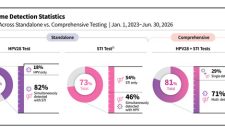
- STAgora™ analysis of approximately 60,000 test results collected over 42 months showed that STI pathogens were detected in 82% of HPV-positive cases
- Findings support the potential value of a comprehensive testing approach that provides both HPV and STI pathogen information
- Seegene to validate the clinical utility of comprehensive HPV & STI testing through the Global Million Clinical Study and establish scientific evidence for new global standards of PCR testing
SEOUL, South Korea, July 27, 2026 /PRNewswire/ — Seegene Inc., a global molecular diagnostics company, announced a comprehensive syndromic PCR-based testing approach for reproductive tract infections (RTIs) through the simultaneous detection of sexually transmitted infections (STIs) and human papillomavirus (HPV).
The announcement follows Seegene’s launch of the Global Million Clinical Study (GMCS) on July 8. The initiative aims to generate scientific evidence for Global New Standard of PCR testing by accumulating real-world clinical data from healthcare institutions worldwide and evaluating the clinical utility of disease-specific diagnostic testing strategies.
HPV is widely recognized as the primary cause of cervical cancer, and certain high-risk genotypes, particularly HPV-16 and HPV-18, are closely associated with disease progression. Because screening and follow-up strategies may vary depending on the HPV genotype detected, identifying not only the presence of HPV but also the genotype provides important clinical information for patient management.
STIs are caused by a variety of pathogens, including Chlamydia trachomatis and Neisseria gonorrhoeae. They may present with a broad range of symptoms, including abnormal discharge, dysuria, genital pain or itching, dyspareunia, lower abdominal pain, genital ulcers, vesicles or warts, and infertility. Because different pathogens often cause similar clinical symptoms, identifying the causative pathogen with symptoms alone may be difficult. In addition, asymptomatic infections are common and may contribute to unrecognized transmission.
Recent studies have suggested that STIs and vaginal dysbiosis may be associated with changes in the local inflammatory, immune, and microbial environment of the cervix, potentially influencing HPV acquisition, persistence, or clearance. This growing body of evidence underscores the importance of interpreting HPV and STI findings within the broader clinical context – including the patient’s age, symptoms, sexual history and exposure risk, pregnancy plan, prior infection history and the specific organism detected. Together, these findings provide a scientific rationale for further evaluating a comprehensive HPV and STI testing approach that assesses HPV risk alongside concurrent sexually transmitted and reproductive tract infections.

STAgora™ Report
Using STAgora™, Seegene’s real-time test data analytics and statistical platform, the company internally analyzed approximately 60,000 HPV & STI co-testing results generated over a 42-month period. The analysis showed that STI pathogens were detected in 82% of HPV-positive cases, while HPV was detected in 46% of STI-positive cases. In addition, co-detection of HPV and STI pathogens was observed in 71% of positive cases identified through comprehensive HPV & STI testing.
These findings demonstrate the potential application of concurrent STI testing with HPV screening. The promising applications may include identifying asymptomatic STIs, assessing co-infections in HPV-positive individuals, and supporting reproductive health evaluations during pregnancy planning or infertility assessment.
Through GMCS, Seegene plans to continue accumulating clinical evidence on comprehensive HPV & STI testing and to statistically evaluate its clinical utility and applicability using STAgora™.
The company will also present the significance and future direction of its comprehensive PCR testing approach at the Association for Diagnostics & Laboratory Medicine (ADLM 2026), to be held from July 28 to July 30 in Anaheim, California.
Glossary & References
RTI (Reproductive Tract Infection)
A disease category encompassing infections of the reproductive tract, including HPV-related infections and sexually transmitted infections (STIs).
STI Test target analytes
Chlamydia trachomatis (CT), Neisseria gonorrhoeae (NG), Mycoplasma genitalium (MG), Trichomonas vaginalis (TV), Mycoplasma hominis (MH), Ureaplasma urealyticum (UU), Ureaplasma parvum (UP), Herpes simplex virus type 1 (HSV-1), Herpes simplex virus type 2 (HSV-2), Treponema pallidum (TP), Gardnerella vaginalis (GV), and Candida albicans (CA).
Selected References
- Brusselaers N, et al. Am J Obstet Gynecol. 2019.
- Koster BD, et al. Nature Communications. 2022.
- Chen X, et al. Nature Communications. 2025.
About Seegene
Seegene is a global molecular diagnostics company with more than 25 years of expertise in research, development and manufacturing of syndromic real-time PCR technologies. The company is widely recognized for its proprietary multiplex PCR technology, which enables the simultaneous detection of multiple pathogens in a single test.
A core feature of Seegene’s syndromic real-time PCR technology is its ability to detect up to 14 pathogens that cause similar signs and symptoms in a single tube while providing quantitative information to support more efficient clinical decision-making.
Seegene’s technological capabilities were demonstrated during the COVID-19 pandemic, when the company supplied more than 340 million COVID-19 tests to over 100 countries worldwide.
Building on its molecular diagnostics expertise, Seegene is expanding beyond assay-based diagnostics to develop an integrated diagnostic ecosystem. The company is advancing new technologies including STAgora™, a real-time diagnostic data analytics platform, and CURECA™, a fully automated PCR system designed to streamline the entire molecular testing workflow.
Through its Technology Sharing Initiative and global partnerships, Seegene aims to broaden access to molecular diagnostics technologies and strengthen global preparedness for infectious diseases.