






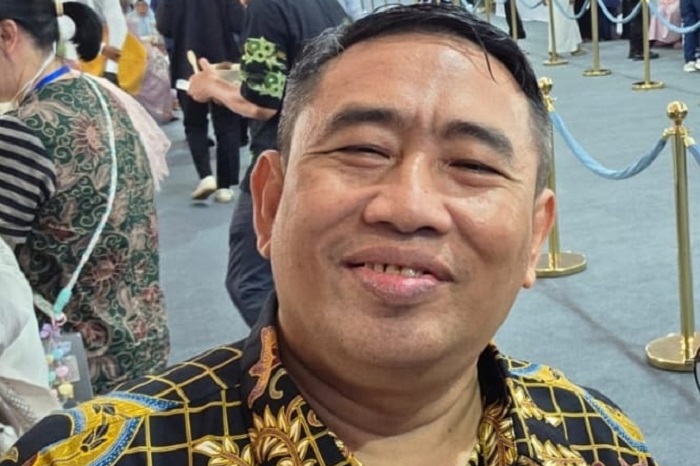
By Stephanus S. Budi Raharjo (Social Observer)
IDUL Fitri arrives each year with a familiar rhythm: the echo of takbir, long journeys across islands and cities, and a simple desire—to return home. Yet this year feels slightly different. Not because everything has changed, but because many things have gone better than we feared.
Beyond our borders, the world is unsettled. Geopolitical tensions are rising, energy prices are climbing, and uncertainty has become a daily language. But within Indonesia, millions of people have kept moving—and they have done so in an orderly way.
That is no small achievement.
This year’s mudik felt like a quiet test for the state: can it still manage itself on a massive scale? The answer, at least this time, is reassuring. Traffic engineering worked, energy distribution remained stable, and transportation systems functioned more smoothly than in previous years.
People arrived.
And “arrival” is a success we often take for granted, when in fact it is the result of many systems working together.
But the journey does not end there. Idul Fitri always has another chapter: travel, reunions, and the revival of local economies. Beaches, mountains, and tourist towns are filled with people celebrating time together.
It is there that the economy moves in its most tangible form. Small eateries are crowded, guesthouses are full, and small businesses feel the immediate impact. Consumption figures may suggest a 15 to 20 percent increase, but behind those numbers lies something more essential: a sense of optimism.
That life goes on.
The state, in this moment, feels present—managing flows, maintaining order, and ensuring that crowds do not turn into chaos. It is not perfect, of course, but it is noticeable.
Baca Juga:
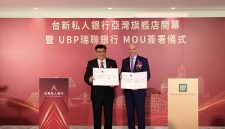
Taishin International Bank Opens Flagship Private Banking Branch in Southern Taiwan
Technology Integrated into Travel Life: JETOUR Maps Out a New Vision for Future Mobility
DBS recognised as Safest Bank in Asia for the 18th consecutive year
And in a time of global uncertainty, such presence matters.
We are now entering the return flow—often the more challenging phase. Here, a more flexible approach begins to take shape. The Work from Anywhere policy allows people to better manage their travel schedules.
This is not merely a technical adjustment, but a new way of viewing mobility: more fluid, more adaptive.
At the same time, the government is beginning to consider medium-term measures. The idea of a one-day Work from Home policy each week, for instance, is not only about workplace comfort, but also about energy efficiency.
Baca Juga:
LEPAS Global Elegance Night Strengthens Global Connections Through Design and User Co-Creation
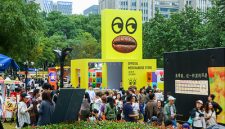
11th Lujiazui Coffee Festival Opens in Shanghai, Bringing Together 390+ Global Brands
With global oil prices rising, potential savings of up to 20 percent are not insignificant. They suggest that domestic policy can be part of the response to global pressures.
The President has also outlined broader directions: legal reform, educational development, and the exploration of future energy sources. These indicate that the focus is not only on the present, but also on what lies ahead.

The Free Nutritious Meals program, for example, carries significant ambition—not only socially, but economically. Like any large-scale initiative, its implementation will require ongoing adjustments. What matters, however, is the direction it sets.
The state is at work—and that work is never finished in a single moment.
In some regions, challenges remain. Post-disaster recovery, housing development, and equitable growth demand patience. Progress, after all, does not move at the same speed everywhere.
It is precisely here that the role of the state is tested: to be present, to listen, and to keep moving forward.
Baca Juga:
President Prabowo’s Idul Fitri moment in Aceh carries its own symbolism. It is more than a visit—it is a message that Indonesia does not revolve around a single center. There is an effort to nurture togetherness across a broader national space.

The State Palace was opened to the public from midday until late afternoon, with a staggered visitation system to ensure comfort and order. Around 5,000 visitors were expected, with arrangements made both inside and outside the palace to accommodate public enthusiasm.
The event featured traditional Idul Fitri dishes and a family-friendly atmosphere, including entertainment for children. It was designed as a moment of connection between the government and the people—strengthening social bonds and national unity.
We are fortunate to have President Prabowo. In an era of rapid and often conflicting information, doubt comes easily. Yet this year’s Idul Fitri offers a simple but meaningful experience: that many things can work well when managed with seriousness.
People returned home. People met again. The economy moved.

And the state was present among them.
Perhaps that is where our sense of fortune lies today.
Not because everything is perfect, but because there is a clear direction, tangible work, and a sense of hope that endures.
The rest, as always, will be decided by time.****